Repairing Damaged Teeth Without Starting From Scratch
A cracked back molar. A filling that’s been in place for fifteen years and is finally showing its age. A tooth that’s worn down unevenly from years of grinding at night. These kinds of everyday dental problems don’t always call for extraction or a completely new tooth; often, the natural tooth can be repaired and strengthened, preserving what’s already there rather than replacing it entirely.
That’s the space where comprehensive restorative dentistry services in Las Cruces live, and it’s one of the most foundational parts of what Dr. Kim Martin’s practice handles day to day. Restorative dentistry covers a wide range of treatments, from fillings and crowns to bridges and beyond, all aimed at repairing damage, restoring function, and keeping a smile working the way it’s supposed to for as long as possible.
Why “restorative” covers more ground than people expect
A lot of patients associate restorative dentistry narrowly with fillings, but the category is much broader than that. These include crowns for teeth that are too damaged for a filling alone to fix, bridges for replacing one or more missing teeth using the surrounding teeth for support, and a range of other treatments designed to repair function and structure rather than purely cosmetic appearance. The unifying theme is repair and preservation — fixing what’s damaged in a way that restores normal biting, chewing, and speaking function.
Common restorative treatments and what they’re used for:
- Fillings: Address cavities and minor decay, restoring the tooth’s shape and function
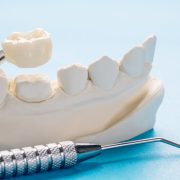
- Crowns: Cover and protect a tooth that’s too damaged or weakened for a filling alone
- Bridges: Replace one or more missing teeth using the surrounding teeth as anchors
- Inlays and onlays: A middle-ground option between a filling and a full crown for moderate damage
- Root canal therapy: Treats infection inside a tooth while preserving the natural tooth structure
- Bonding: Repairs minor chips or cracks using a tooth-colored composite material
- Dental sealants: A protective coating applied to the chewing surfaces of molars to prevent decay in vulnerable grooves
Why restoring a natural tooth is usually the best first option
Whenever it’s a realistic option, preserving a natural tooth tends to be preferable to extraction and replacement. Natural teeth provide better long-term function, don’t require the additional procedures involved with implants or bridges, and generally cost less overall when caught early enough that restoration is still possible. That’s part of why Dr. Martin’s approach tends to prioritize the most conservative, effective option first, reserving more involved treatment for situations where a tooth genuinely can’t be saved.
Signs it might be time to look into restorative treatment:
- A tooth that’s visibly cracked, chipped, or worn down unevenly
- Persistent sensitivity to hot, cold, sweet, or pressure on a specific tooth
- An old filling or crown that’s discolored, loose, or showing wear
- Pain when chewing that seems to be centered on one particular tooth
- A tooth that looks noticeably shorter or more worn than the ones around it
- Small cracks that seem to be gradually getting more visible over time
What determines which restorative option is right for a given tooth?
The right treatment depends heavily on how much of the natural tooth structure remains intact and functional. A small cavity might only need a simple filling. Moderate damage that’s too extensive for a filling but doesn’t require a full crown might be addressed with an inlay or onlay, a middle-ground option that covers more surface area than a filling while preserving more natural tooth structure than a full crown would require. More significant damage, including a tooth that’s cracked deeply or has undergone previous root canal treatment, often calls for a full crown to provide adequate strength and protection going forward.
Dr. Martin’s team walks through this decision-making process clearly with patients, explaining not just what’s recommended but why, so patients understand the reasoning behind a specific treatment rather than simply being told what to do.
What the treatment process generally looks like
Most restorative treatments follow a similar general pattern: numbing the area, removing damaged or decayed material, and rebuilding the tooth’s structure using an appropriate material, whether that’s a direct filling placed in a single visit or a custom crown that requires impressions and a follow-up appointment once it’s been fabricated. For crowns specifically, a temporary crown is typically placed to protect the tooth while the permanent version is being crafted, usually over one to two weeks.
Why Las Cruces patients often bring restorative concerns up
Las Cruces’ dry climate and hard water can contribute to enamel wear over time for some patients, and a fair number of longtime residents come in with older dental work, sometimes decades old, that’s simply reached the end of its useful life. NMSU’s presence in the community also means a fair number of younger patients dealing with the aftermath of an injury, whether from sports or an accident, need a tooth repaired and restored to full function rather than losing it entirely.
What happens when a tooth is too damaged to restore
Not every tooth can be saved, even with the most conservative and effective restorative treatment available. When decay or damage has progressed too far, or when a crack extends below the gumline into the root, extraction is sometimes the more realistic path forward. In those situations, the conversation shifts toward replacement options, like a bridge or implant, rather than restoration. Dr. Martin’s practice is upfront about this possibility when it applies, rather than attempting a restorative fix that’s unlikely to hold up long-term, since a treatment that fails prematurely often ends up costing more time and money than addressing the situation directly from the start.
How material choice affects the long-term outcome
Restorative materials have improved considerably over the past couple of decades, and the right choice depends on the specific tooth, its location, and the forces it needs to withstand. Molars, which handle the bulk of chewing force, often benefit from stronger materials designed to withstand repeated pressure, while front teeth prioritize a more natural cosmetic appearance alongside durability. Patients who grind their teeth at night present a unique consideration, too, since that additional force means certain materials hold up better than others over time, and a nightguard is often recommended alongside restorative treatment to protect the investment going forward.
A few pointers if you suspect you need restorative treatment:
- Don’t ignore a persistent ache on a specific tooth, since it often points to something that needs attention before it worsens
- Ask specifically what’s causing the recommendation for one treatment over another, since the reasoning matters for understanding your options
- Consider the long-term durability of different materials when discussing options for a specific tooth
- If you grind your teeth at night, mention it, since it factors into which restorative material will hold up best
- Don’t wait until an old filling or crown visibly fails, since replacing it proactively is often simpler than an emergency repair
If a tooth has been bothering you, or old dental work is starting to show its age, a consultation is the best way to find out what’s needed to restore it properly. Scheduling that visit sooner rather than later usually means a simpler, more conservative fix, and a smile that’s built to last for years to come, without unnecessary treatment or a bigger repair than the situation calls for.
FAQs
What’s the difference between a filling and a crown?
A filling repairs a small area of decay, while a crown covers the entire tooth for more significant damage.
How long do crowns typically last?
With good care, many crowns last a decade or more before needing replacement.
Does restorative treatment hurt?
Local anesthetic keeps the area numb, so most patients feel pressure rather than pain.
Can an old filling be replaced with a newer one?
Yes, replacing worn or failing fillings is a common and straightforward procedure.
How do I know if I need a filling or something more involved?
An exam and X-rays will determine the extent of damage and the right treatment.
Will insurance help cover restorative treatment?
Many plans cover a portion of restorative work, and the office can help verify your specific benefits.